


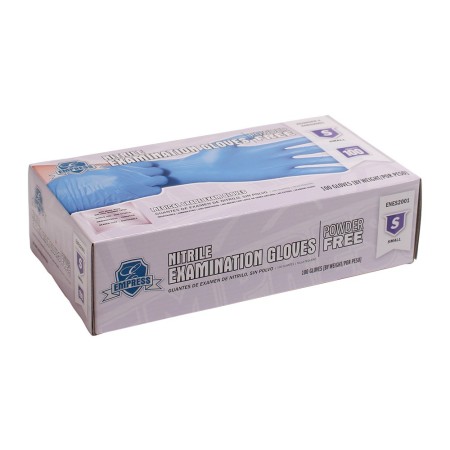


Empress Exam Grade Nitrile Glove Blue Powder Free Small
Exam grade blue nitrile gloves medium powder free for reliable, everyday PPE in healthcare, food handling, janitorial, and facility maintenance. Empress ENEM2002 (100 gloves/box) ships 10 boxes per case (1,000 gloves/case) for consistent par-level stocking.


(edit with the Customer Reassurance module)

(edit with the Customer Reassurance module)

(edit with the Customer Reassurance module)
Quick Jump
Overview
What these exam-grade nitrile gloves are and how to stock them for daily operations.
Glove Program Guide
Sizing, standardization, and par levels to reduce stockouts and training friction.
Explore More
Shop by Industry, Need, and Challenge—plus core reorder categories that support PPE programs.
Empress ENEM2002 Exam Grade Blue Nitrile Gloves — Powder-Free, Medium (100/Box, 1,000/Case)
Exam grade blue nitrile gloves medium powder free are built for consistent, day-to-day hand protection in fast-moving operations. Empress ENEM2002 is a Medium size, powder-free, nitrile disposable glove packed 100 gloves per box with 10 boxes per case (1,000 gloves/case)—ideal for standardizing PPE stocking across departments.
For Central Florida facilities serving Orlando and Kissimmee, this case-pack format supports predictable purchasing, easier par-level planning, and faster replenishment for teams that consume gloves all day.
- Standardize PPE across locations with a repeatable box/case format
- Reduce stockouts by setting par levels per area (restrooms, EVS closets, kitchens, nursing stations)
- Improve training efficiency with consistent glove placement and sizing rules
- Support compliance workflows by keeping gloves accessible where tasks require them (policy-driven use)
Purchasing note: If you manage multiple areas, standardize one “primary glove” size for most users (often Medium) and keep a smaller quantity of other sizes where needed. This reduces SKU sprawl while keeping teams compliant and productive.
Specs & Best Uses
Key Specifications
- Brand
- Empress
- Item / MPN
- ENEM2002
- Product Type
- Disposable nitrile gloves
- Grade
- Exam grade
- Powder
- Powder-free
- Color
- Blue
- Size
- Medium
- Pack
- 100 gloves per box
- Case Pack
- 10 boxes per case (1,000 gloves per case)
- UPC
- 820524012498
Best Uses by Industry
- Hospitality & Food Services: kitchens, dish areas, back-of-house prep, and routine cleaning tasks where gloves are part of SOPs
- Healthcare Facilities: supply carts, exam rooms, and nurses stations for consistent, on-hand PPE availability
- Professional & Business Services: restocking janitorial closets, breakrooms, and front-of-house cleaning kits
- Industrial & Facilities: maintenance and general-purpose protection where teams need quick glove access
Purchasing & Par-Level Tips
- Set par by area: assign a minimum/maximum box count per station (EVS cart, kitchen line, nurses station).
- Standardize placements: store the same glove box position in every closet/cart to reduce training time.
- Order rhythm: reorder before you hit the “last-case” threshold to avoid emergency substitutions.
- Reduce SKU sprawl: keep Medium as the primary daily-use size when it fits most of your team.
Build the Full PPE + Sanitation Kit
Gloves perform best when paired with the core categories that drive daily compliance and cleaning outcomes.
Glove Program Guide: Size, Standardization & Operational Control
A glove program fails most often because of wrong sizing, poor placement, and inconsistent ordering—not because the glove “isn’t good.” Use the guide below to reduce waste, improve compliance behavior, and keep teams moving.
1) Choose the Right Size (Reduce Tears & Waste)
- Too small: more tearing, slower donning, higher consumption
- Too large: reduced dexterity and grip, more task friction
- Best practice: set Medium as the primary size when it fits most users, then stage limited quantities of other sizes where required
2) Match Gloves to the Task (Policy-Driven PPE)
- Healthcare: stock at point-of-care and in supply carts for consistent PPE availability
- Foodservice: stage near prep/cleaning zones so staff don’t “skip” glove use
- Janitorial: pair gloves with approved chemicals and a defined changeout routine
3) Placement & Dispensing (Make Compliance Easy)
- Point-of-use wins: place boxes where the task happens (not “in the office”).
- Standard locations: same shelf, same bin, same label across all buildings.
- Restock routine: tie glove checks to the same schedule as paper/liners/chemicals.
4) Common Problems & What They Usually Mean
- Boxes disappear fast: set par levels + stage by area to eliminate “shared stash” behavior
- Frequent tearing: size mismatch or rushed donning; standardize sizing rules
- Compliance drift: gloves not at point-of-use; move inventory to the work zone
- Emergency substitutions: reorder too late; establish a minimum on-hand case threshold
Explore More: Programs, Challenges & Core Reorder Paths
Use our 4-4-4-4 approach to increase consistency and reduce operational friction: align supplies by industry, standardize core categories, focus on core products, and solve core challenges with repeatable purchasing routines.
Shop by Industry
Build complete supply programs by facility type (hospitality, healthcare, professional buildings, facilities).
Shop by Need
Stock PPE where it supports real workflows: cleaning, safety routines, and task-based kits.
Shop by Challenge
Control compliance, prevent stockouts, reduce cost, and make training faster with standardized programs.
Core Reorder Categories
Pair gloves with the categories that determine daily sanitation outcomes and purchasing stability.
4 Operational Challenges This Product Supports
- Sanitation & Compliance Readiness — keep PPE accessible where policy requires it
- Inventory & Supply Reliability — set par levels and reorder thresholds to avoid substitutions
- Cost Control & Purchasing Optimization — standardize SKUs to reduce waste and over-ordering
- Staffing & Training Efficiency — consistent placement and routines reduce training time
FAQ: Exam Grade Nitrile Gloves (Purchasing & Stocking)
How many gloves are in a case?
Empress ENEM2002 ships 10 boxes per case with 100 gloves per box for a total of 1,000 gloves per case.
How do I set par levels for gloves?
Assign a minimum and maximum box quantity per station (EVS cart, kitchen line, nurses station). Reorder before the area drops below the minimum to prevent emergency substitutions and skipped compliance steps.
Where should gloves be placed to improve compliance?
Place glove boxes at point-of-use (where tasks happen). When gloves are stored “down the hall,” teams are more likely to skip use or hoard boxes.
Should I standardize one size across multiple locations?
Yes—standardization reduces purchasing complexity and training friction. Keep a primary size for most users (often Medium) and stage smaller quantities of other sizes where needed.
What should I pair with gloves for a complete sanitation kit?
Most programs pair gloves with cleaning chemicals, disinfectants, liners, and paper products so teams can complete tasks without workarounds.
test
Key Specs — Ordering & Standardization
SKU & Pack Details
- Brand
- KIK
- Product
- Pure Bright Bleach
- Concentration
- 6%
- Unit Size
- 1 Gallon
- Case Pack
- 6/Case
- Item #
- 11008635042
- UPC
- 059647210143
Inventory Controls (Recommended)
- Order by case to keep chemical programs consistent across teams and shifts.
- Assign a single storage zone and track “open case” usage for accountability.
- Set minimum par levels per location to avoid stockouts mid-week.
- Use a simple checklist: receiving, storage, measuring tools, and SOP reminders.
Procurement Pathways
Keep bleach as a controlled-use item and fill the rest of the workflow with daily-use products.
- Bathroom Cleaners for daily tasks (non-bleach)
- All-Purpose Cleaners for general zone cleaning
- Disinfectants & Sanitizers for label-claim tasks
Business Account Advantage
For multi-location or high-frequency reorders, ask about a business account and account manager support. The goal: fewer urgent purchases, better par levels, and consistent case ordering.
Applications & Best Uses (Label-First)
This 6% commercial bleach is typically used in controlled tasks within janitorial and facility programs. The best practice is always label-first: approved surfaces, dilution, and contact time depend on the manufacturer label.
Where It Typically Fits
- Scheduled deep-clean tasks where bleach is appropriate and supervised.
- Restrooms as part of a planned deep-clean routine (not a substitute for daily cleaners).
- Maintenance zones with SOPs, measuring tools, and controlled storage.
Best Fit by Operation
- Hospitality & Food Service: BOH deep-clean routines when label allows.
- Healthcare / Clinics: only when procedures call for bleach and label directions are followed.
- Professional buildings: restrooms and scheduled deep-clean programs.
- Facilities: maintenance workflows with documented SOPs.
Pair With for Complete Workflows
- Bathroom cleaners for daily non-bleach tasks.
- All-purpose cleaners for general zone cleaning and wipe-downs.
- Disinfectants & sanitizers for specific label claims.
Practical “Do Not” Reminder
- Do not mix with other chemicals unless label-approved.
- Use only on approved surfaces and follow contact time instructions.
- Ventilate and use required PPE as directed by the label.
Bleach Use Guide — Safer Use, Better Results, Less Waste
Treat bleach as a controlled-use chemical. The goal is consistent outcomes, fewer mistakes, and fewer repeat-cleaning problems — without overuse. Always follow the manufacturer label.
Safety First (Non-Negotiable)
- Follow label requirements for PPE, ventilation, dilution, and contact time.
- Use a measuring tool to prevent waste and inconsistent results.
- Keep away from incompatible chemicals unless label-approved.
Storage & Handling (Program Control)
- Assign a dedicated storage location (locked/controlled if appropriate).
- Label the shelf and keep “open-case” tracking simple (date opened, responsible shift).
- Train one standard routine per zone — reduce improvisation.
Reduce Rework (Where Teams Lose Time)
Rework usually happens when the wrong chemical is used for the task or the routine is inconsistent. Build a “daily vs deep-clean” workflow and standardize products across shifts.
- Daily routines: Bathroom Cleaners + All-Purpose Cleaners
- Task-specific label claims: Disinfectants & Sanitizers
Training Shortcut (SOP Template)
- Approved surfaces and “do not use on” notes (from label).
- Mix/dilution rules + required contact time (from label).
- PPE checklist + storage rules + who signs off per shift.
FAQ & Documents
Documents
If SDS/spec sheets are available, download them from the product’s Attachments section. Always follow the manufacturer label for approved use and safety requirements.
Why standardize one bleach SKU across locations?
Standardization reduces training confusion, improves reorder discipline, and prevents last-minute substitutions that lead to inconsistent outcomes.
How do we reduce bleach waste in a facility program?
Treat bleach as controlled-use: assign storage zones, use measuring tools, and set shift responsibility with a simple SOP.
What is the safest default rule for bleach use?
Label-first: follow approved surfaces, dilution guidance, contact time, ventilation, and PPE requirements exactly as stated on the manufacturer label.
What products pair well with bleach in a standard program?
Use daily cleaners for routine tasks (bathroom and all-purpose) and reserve bleach for controlled tasks where appropriate; add task-specific disinfectants/sanitizers when label claims are required.
Explore more (smart cross-sell paths):
feedback Report comment