


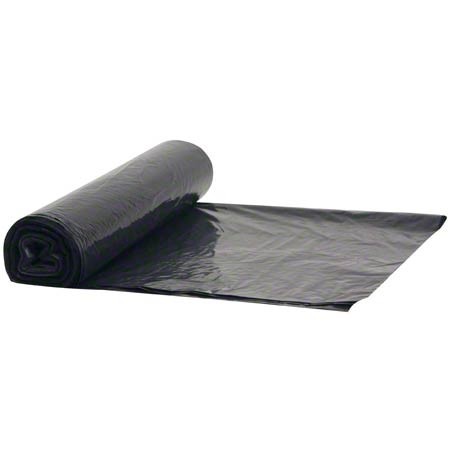

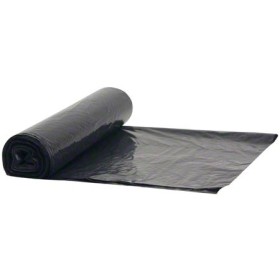
Nova NOVA519 Black Repro Coreless Can Liner — 60 Gallon, 38" x 58", 1.2 mil
Economical black reprocessed-resin can liner in a coreless roll format for fast stocking in busy facilities. Sized 38" x 58" with 1.2 mil thickness to fit 60-gallon containers. Packed 100 liners per case—ideal for back-of-house, maintenance, and high-traffic operations across Orlando, Kissimmee, and Central Florida.


Quick Jump
Overview
Coreless roll 60-gallon liner basics, key benefits, and ideal facility zones.
Key Specs
Size, thickness, capacity, material, case pack—fast purchasing reference.
Fit & Roll Guide
How to confirm 60-gallon fit and why coreless rolls improve stocking speed.
Explore More
Internal links to can liners, trash bags, chemicals, and facility essentials.
Economical Black Reprocessed-Resin Coreless Roll Can Liner — 60 Gallon (38" x 58", 1.2 mil), 100/Case
This economical black reprocessed-resin can liner is supplied in a coreless roll format to speed up stocking and reduce cardboard-core waste in busy facilities. Sized 38" x 58" for 60-gallon containers and made at 1.2 mil thickness, it provides dependable everyday performance for back-of-house and maintenance trash streams.
With 100 liners per case, it supports efficient inventory management for multi-location operations in Orlando, Kissimmee, and Central Florida—helping teams keep trash stations consistent, reduce emergency runs, and maintain smoother daily workflows.
- Coreless roll convenience: faster stocking and less packaging waste
- 60-gallon fit: 38" x 58" for common large containers
- Everyday durability: 1.2 mil for regular BOH and maintenance use
- Operational efficiency: 100/case supports standardized ordering
Best for: Back-of-house, loading areas, maintenance routes, and high-traffic facilities using 60-gallon containers.
Fit note: Container shape varies—confirm the bin opening width and height for best cuff and closure.
Specs & Best Uses
Key Specifications
- Product Type
- Can liner (trash bag), coreless roll
- Capacity
- 60-gallon containers
- Size
- 38" x 58"
- Thickness
- 1.2 mil
- Color
- Black
- Material
- Reprocessed resin
- Packaging
- Coreless roll format
- Case Pack
- 100 liners per case
Best Uses
- Back-of-house: kitchens, receiving, and production spaces with large containers
- Maintenance: route-based stocking where speed and consistency matter
- High-traffic facilities: schools, offices, restaurants, warehouses, and public areas
- Multi-location programs: standardize 60-gallon stations across sites
How to Confirm 60-Gallon Can Liner Fit (and Why Coreless Rolls Help)
Proper sizing reduces slip-down, tears, and leaks. Coreless rolls improve operational efficiency by reducing packaging bulk and making it easier to stage liners on carts and in supply closets.
Step 1: Measure Your Container
- Opening width: measure the top rim diameter (or width across for square bins).
- Height: measure bottom to rim to ensure enough bag length for a cuff.
- Waste type: heavier or sharp waste benefits from higher mil thickness.
Step 2: Verify 38" x 58" Coverage
- 38" width: helps provide a secure cuff on many 60-gallon containers.
- 58" length: supports liner depth and closure for larger bins.
- If the liner slips down, consider a wider bag; if it tears, increase thickness or reduce load.
Why Coreless Rolls Are Popular
- Faster stocking: easy to stage on carts and in dispensers (where applicable).
- Less waste: no cardboard core to discard.
- Space efficiency: rolls can store more neatly in tight closets.
Common Issues (and Fixes)
- Tears / punctures: sharp debris or overload—consider thicker liners for that zone
- Leaks: puncture risk or wet waste—use stronger spec for BOH liquids
- Slips down: bag too narrow for the container rim—adjust width
- Hard to tie: bag too short—select longer length for better closure
Explore More (Popular Facility Supply Paths)
Standardize high-reorder categories to reduce stockouts and simplify purchasing across Central Florida facilities.
Can Liners & Trash Bags
Everyday liners and heavier specs for BOH, maintenance, and public area stations.
Cleaning Chemicals & Sanitizers
Support trash areas with reliable cleaners, degreasers, and disinfectants.
Paper Towels & Toilet Paper
Build consistent restroom programs for better service reliability and cost control.
Facility Dispensers
Dispensers that support controlled usage and standardized refill systems.
FAQ: 60-Gallon Coreless Roll Can Liners
What does “coreless roll” mean?
Coreless rolls have no cardboard center core. They help reduce packaging waste and can speed up stocking for janitorial and maintenance teams.
Is 1.2 mil thick enough for back-of-house use?
1.2 mil is a common everyday thickness for many BOH and maintenance applications. If you handle sharp or heavy debris, consider a heavier mil spec for that zone.
How do I confirm the correct liner size?
Measure the container opening and height, then choose a liner that provides a secure cuff and enough length for closure. Use the Fit & Roll Guide above for quick sizing steps.
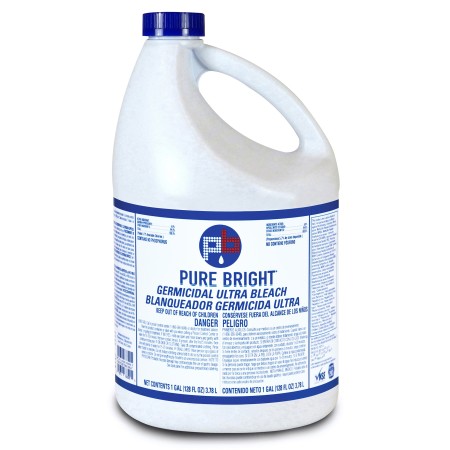
KIK Pure Bright Bleach 6% — 1 Gallon (6/Case)
KIK Pure Bright Bleach 6% (1 gallon, 6 per case) is a dependable, controlled-use commercial bleach option for janitorial and facility programs that need consistent results, predictable reorders, and fewer emergency supply runs.
- Concentration
- 6%
- Size
- 1 Gallon
- Case Pack
- 6/Case
- Item #
- 11008635042
- UPC
- 059647210143
Why Facilities Standardize This SKU
- Predictable ordering: consistent case pack supports stable par levels.
- Controlled-use: reduces random substitutions and inconsistent outcomes.
- Program discipline: supports SOP-based deep-clean tasks where bleach is appropriate.
Label-First Reminder
Always follow the manufacturer label for approved surfaces, dilution guidance, contact time, ventilation, and PPE requirements. Do not mix with other chemicals unless label-approved.
Purchasing Tip (Most Common Win)
- Set a par level (minimum on-hand) by location and reorder by case.
- Assign a storage zone and shift responsibility to prevent “free-pour” waste.
- Use measuring tools to support consistent dilution and reduce rework.
Shop related categories:
Local advantage: USA Hospitality has served Central Florida since 2006. Ask about fast local delivery in Orlando & Kissimmee and a dedicated account manager to help with reorder planning and emergency orders.
Key Specs — Ordering & Standardization
SKU & Pack Details
- Brand
- KIK
- Product
- Pure Bright Bleach
- Concentration
- 6%
- Unit Size
- 1 Gallon
- Case Pack
- 6/Case
- Item #
- 11008635042
- UPC
- 059647210143
Inventory Controls (Recommended)
- Order by case to keep chemical programs consistent across teams and shifts.
- Assign a single storage zone and track “open case” usage for accountability.
- Set minimum par levels per location to avoid stockouts mid-week.
- Use a simple checklist: receiving, storage, measuring tools, and SOP reminders.
Procurement Pathways
Keep bleach as a controlled-use item and fill the rest of the workflow with daily-use products.
- Bathroom Cleaners for daily tasks (non-bleach)
- All-Purpose Cleaners for general zone cleaning
- Disinfectants & Sanitizers for label-claim tasks
Business Account Advantage
For multi-location or high-frequency reorders, ask about a business account and account manager support. The goal: fewer urgent purchases, better par levels, and consistent case ordering.
Applications & Best Uses (Label-First)
This 6% commercial bleach is typically used in controlled tasks within janitorial and facility programs. The best practice is always label-first: approved surfaces, dilution, and contact time depend on the manufacturer label.
Where It Typically Fits
- Scheduled deep-clean tasks where bleach is appropriate and supervised.
- Restrooms as part of a planned deep-clean routine (not a substitute for daily cleaners).
- Maintenance zones with SOPs, measuring tools, and controlled storage.
Best Fit by Operation
- Hospitality & Food Service: BOH deep-clean routines when label allows.
- Healthcare / Clinics: only when procedures call for bleach and label directions are followed.
- Professional buildings: restrooms and scheduled deep-clean programs.
- Facilities: maintenance workflows with documented SOPs.
Pair With for Complete Workflows
- Bathroom cleaners for daily non-bleach tasks.
- All-purpose cleaners for general zone cleaning and wipe-downs.
- Disinfectants & sanitizers for specific label claims.
Practical “Do Not” Reminder
- Do not mix with other chemicals unless label-approved.
- Use only on approved surfaces and follow contact time instructions.
- Ventilate and use required PPE as directed by the label.
Bleach Use Guide — Safer Use, Better Results, Less Waste
Treat bleach as a controlled-use chemical. The goal is consistent outcomes, fewer mistakes, and fewer repeat-cleaning problems — without overuse. Always follow the manufacturer label.
Safety First (Non-Negotiable)
- Follow label requirements for PPE, ventilation, dilution, and contact time.
- Use a measuring tool to prevent waste and inconsistent results.
- Keep away from incompatible chemicals unless label-approved.
Storage & Handling (Program Control)
- Assign a dedicated storage location (locked/controlled if appropriate).
- Label the shelf and keep “open-case” tracking simple (date opened, responsible shift).
- Train one standard routine per zone — reduce improvisation.
Reduce Rework (Where Teams Lose Time)
Rework usually happens when the wrong chemical is used for the task or the routine is inconsistent. Build a “daily vs deep-clean” workflow and standardize products across shifts.
- Daily routines: Bathroom Cleaners + All-Purpose Cleaners
- Task-specific label claims: Disinfectants & Sanitizers
Training Shortcut (SOP Template)
- Approved surfaces and “do not use on” notes (from label).
- Mix/dilution rules + required contact time (from label).
- PPE checklist + storage rules + who signs off per shift.
FAQ & Documents
Documents
If SDS/spec sheets are available, download them from the product’s Attachments section. Always follow the manufacturer label for approved use and safety requirements.
Why standardize one bleach SKU across locations?
Standardization reduces training confusion, improves reorder discipline, and prevents last-minute substitutions that lead to inconsistent outcomes.
How do we reduce bleach waste in a facility program?
Treat bleach as controlled-use: assign storage zones, use measuring tools, and set shift responsibility with a simple SOP.
What is the safest default rule for bleach use?
Label-first: follow approved surfaces, dilution guidance, contact time, ventilation, and PPE requirements exactly as stated on the manufacturer label.
What products pair well with bleach in a standard program?
Use daily cleaners for routine tasks (bathroom and all-purpose) and reserve bleach for controlled tasks where appropriate; add task-specific disinfectants/sanitizers when label claims are required.
Explore more (smart cross-sell paths):
feedback Report comment